

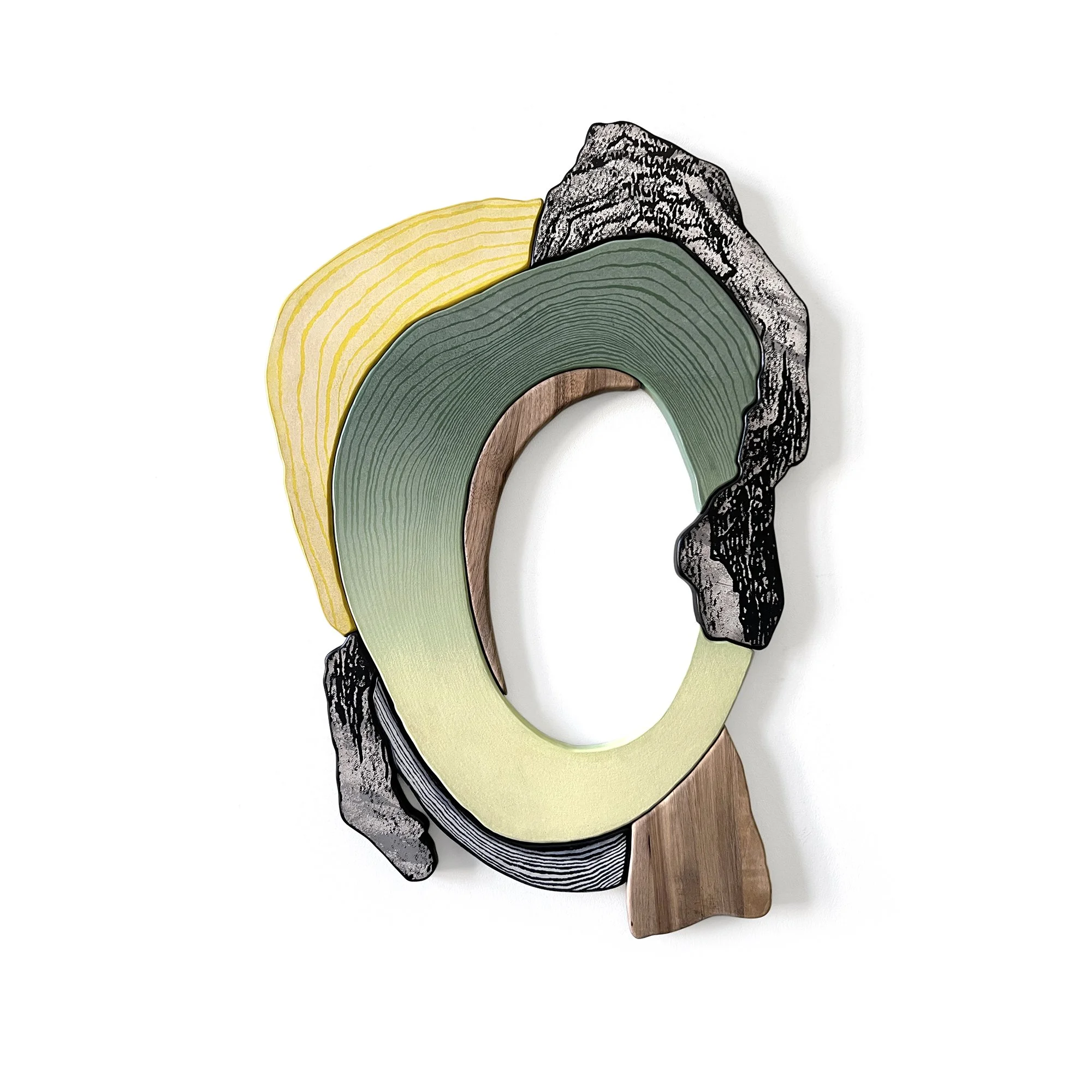
ZERO 02-1
2026
Acrylic and silkscreen ink on wood
52x77x2cm
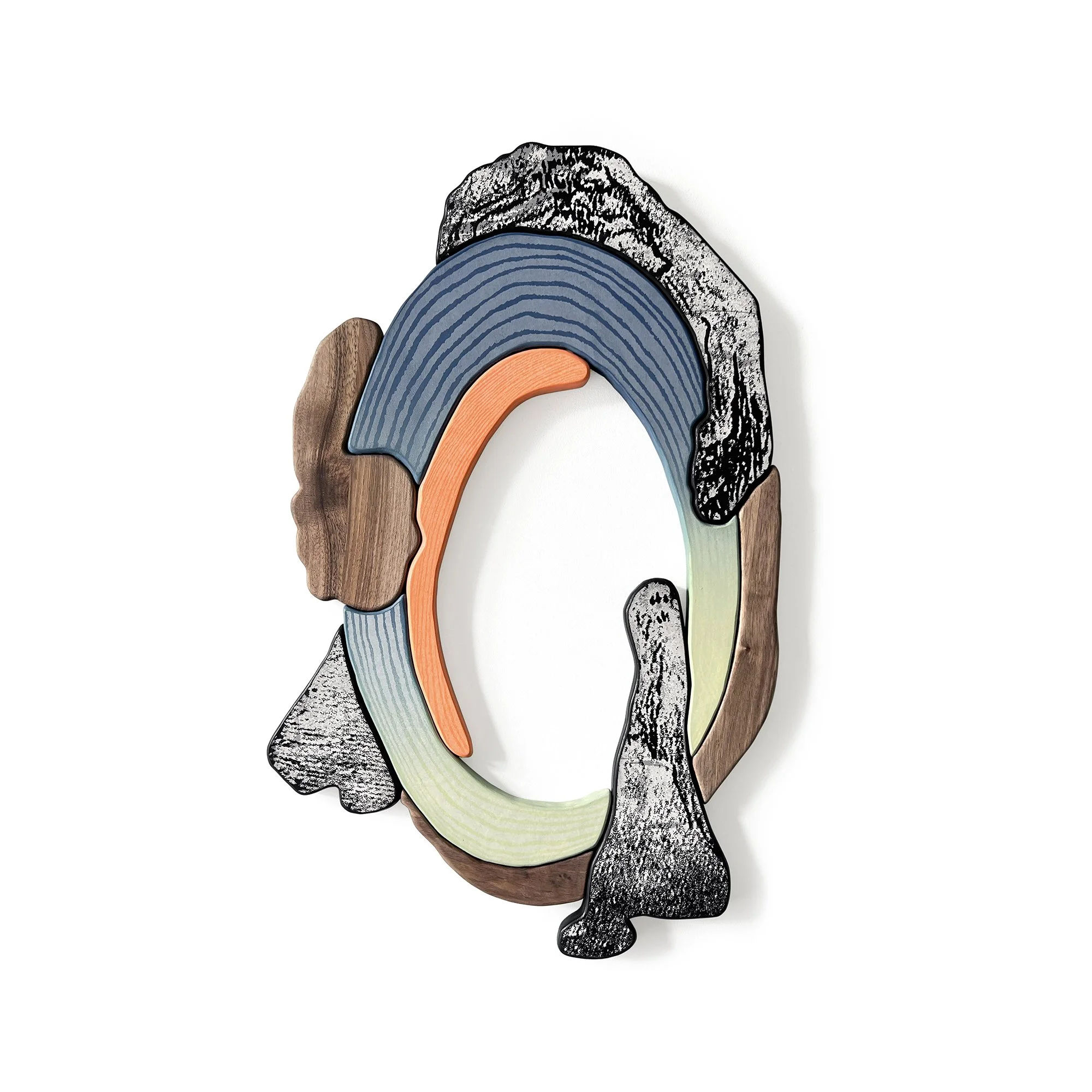
ZERO 02-2 2026 Acrylic and silkscreen ink on wood 43x68x2cm
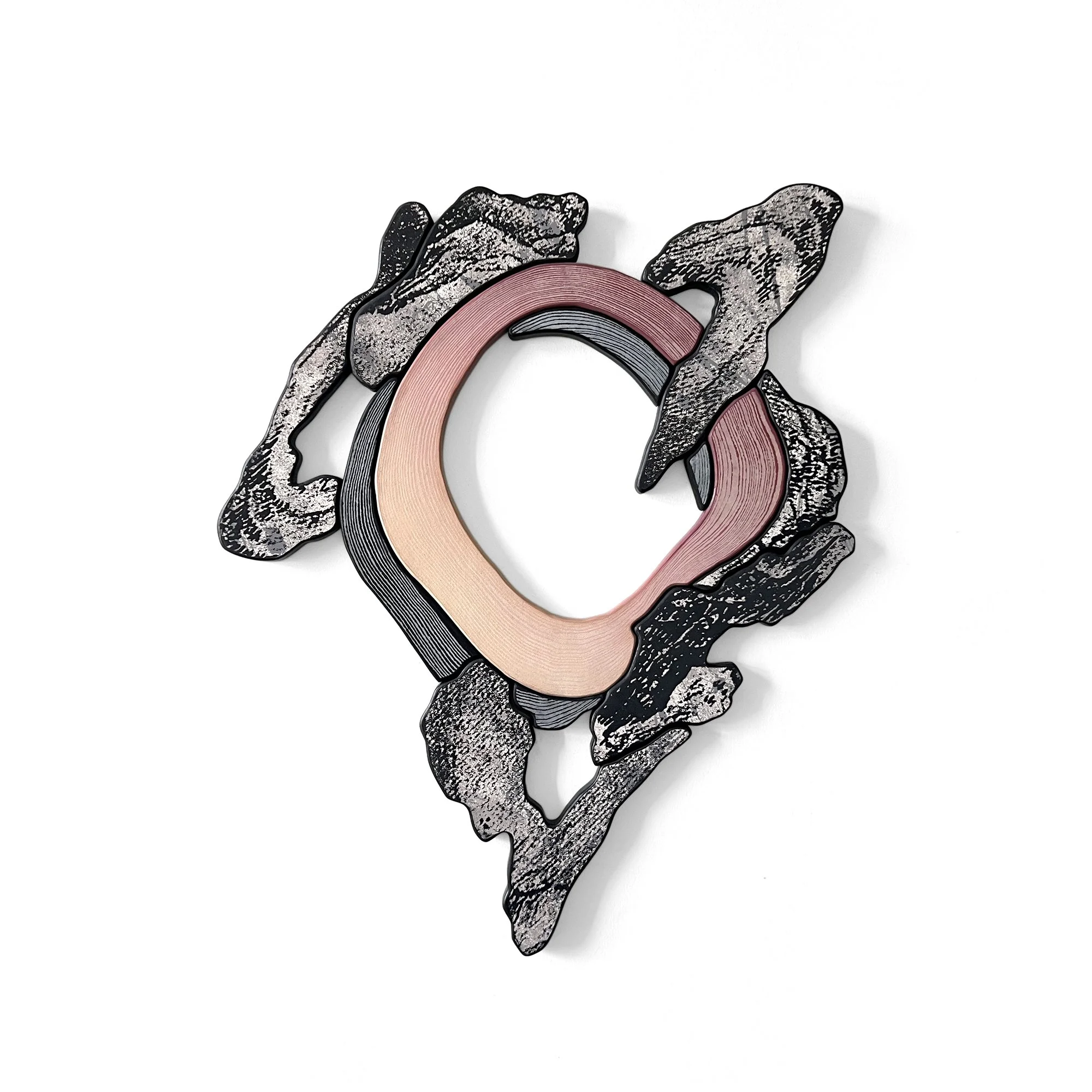
ZERO 06-2 2026 Acrylic and silkscreen ink on wood 59x72x2cm
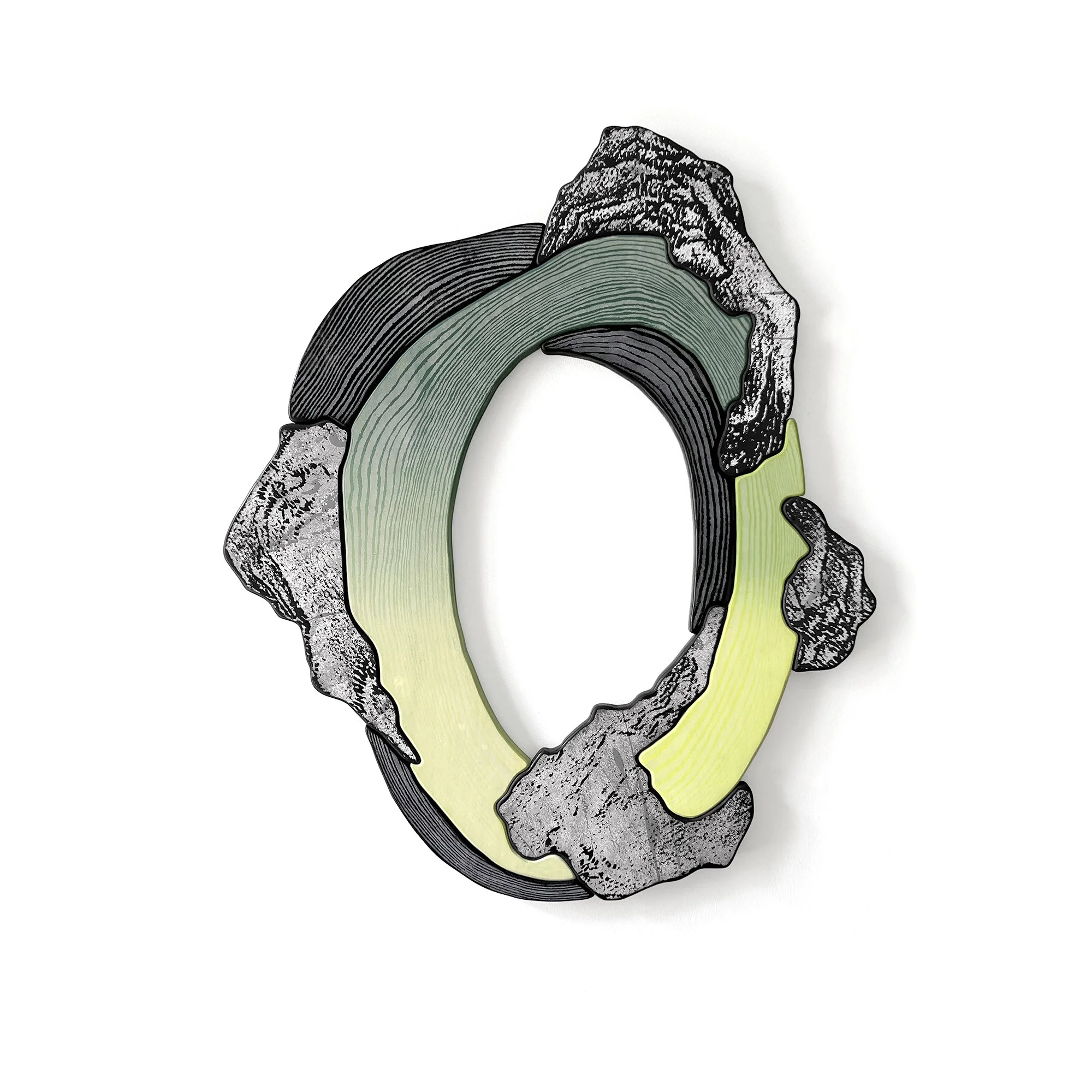
ZERO 07-2
2026
Acrylic and silkscreen ink on wood
68x78x2cm
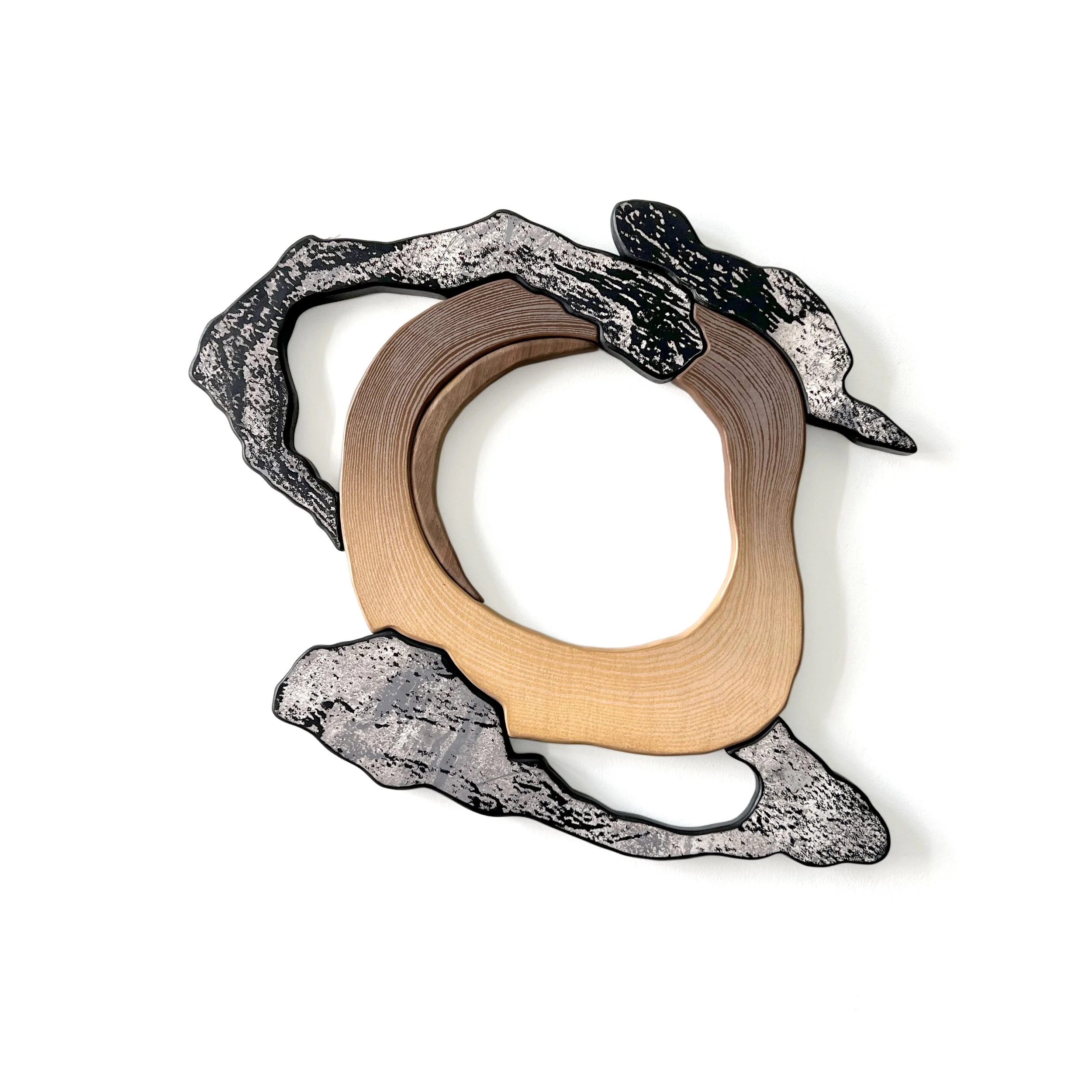
ZERO 06-3
2026
Acrylic and silkscreen ink on wood
48×54x2cm
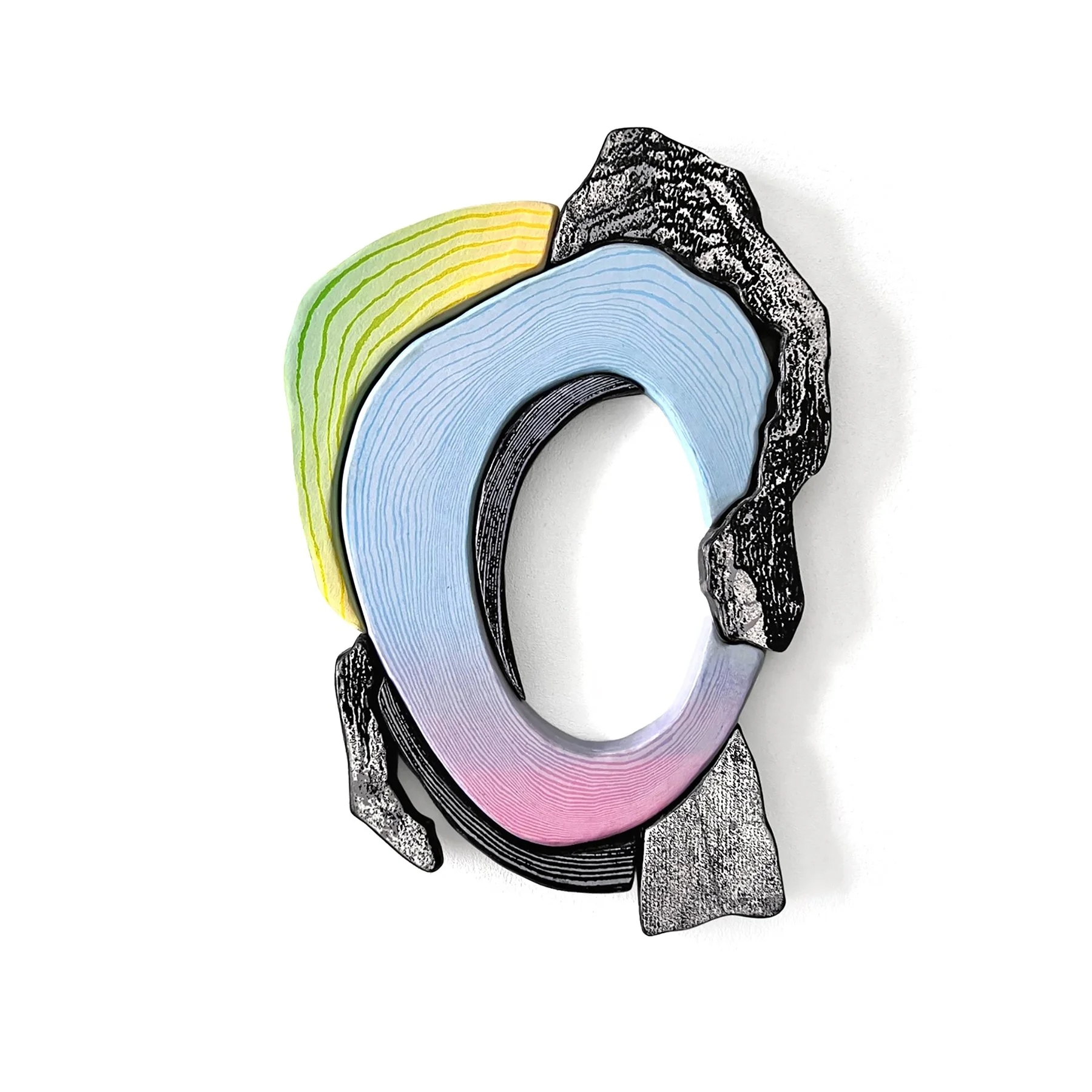
ZERO 01
2025
Acrylic and silkscreen ink on wood
26x38.5x2cm
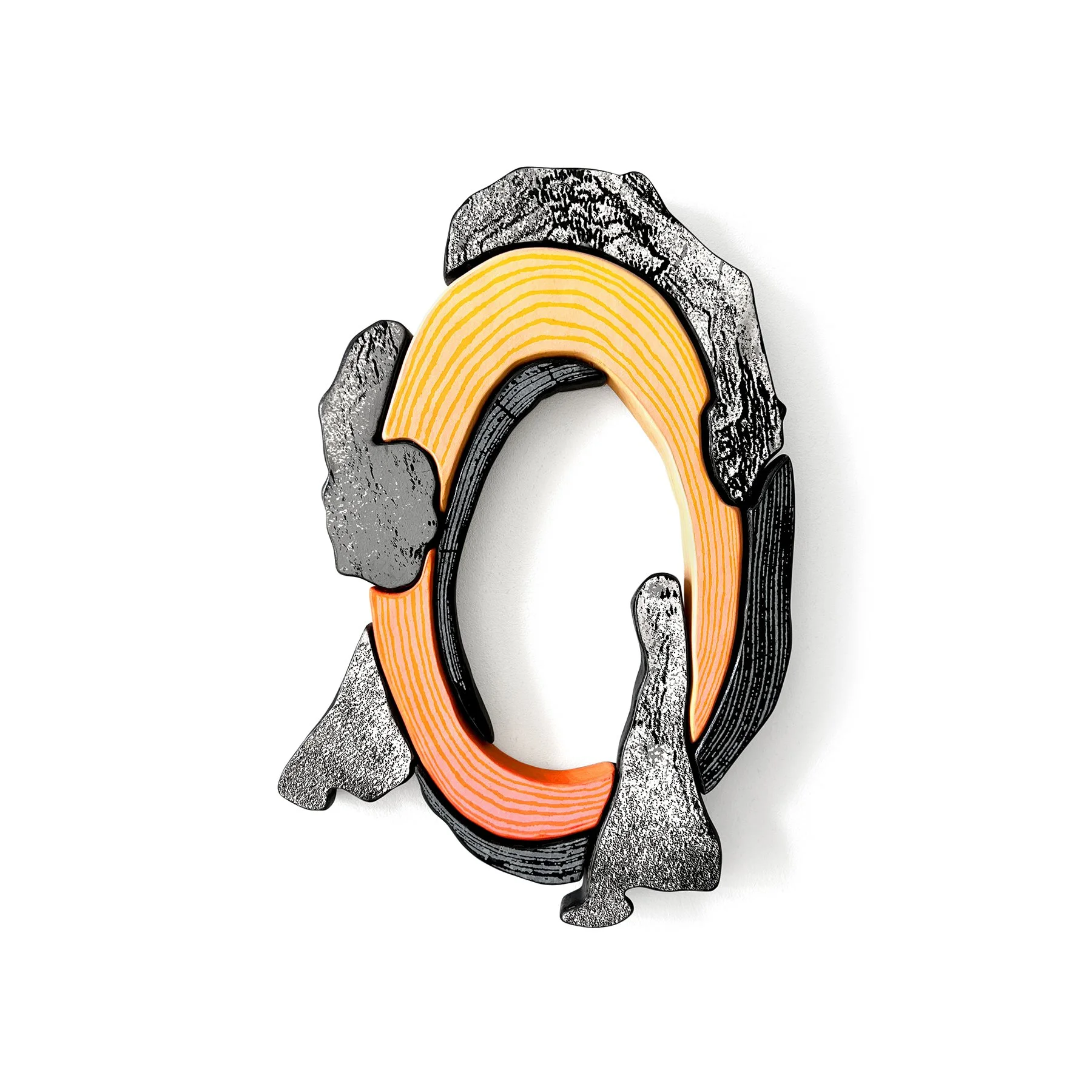
ZERO 02
2025
Acrylic and silkscreen ink on wood
23x34x2cm
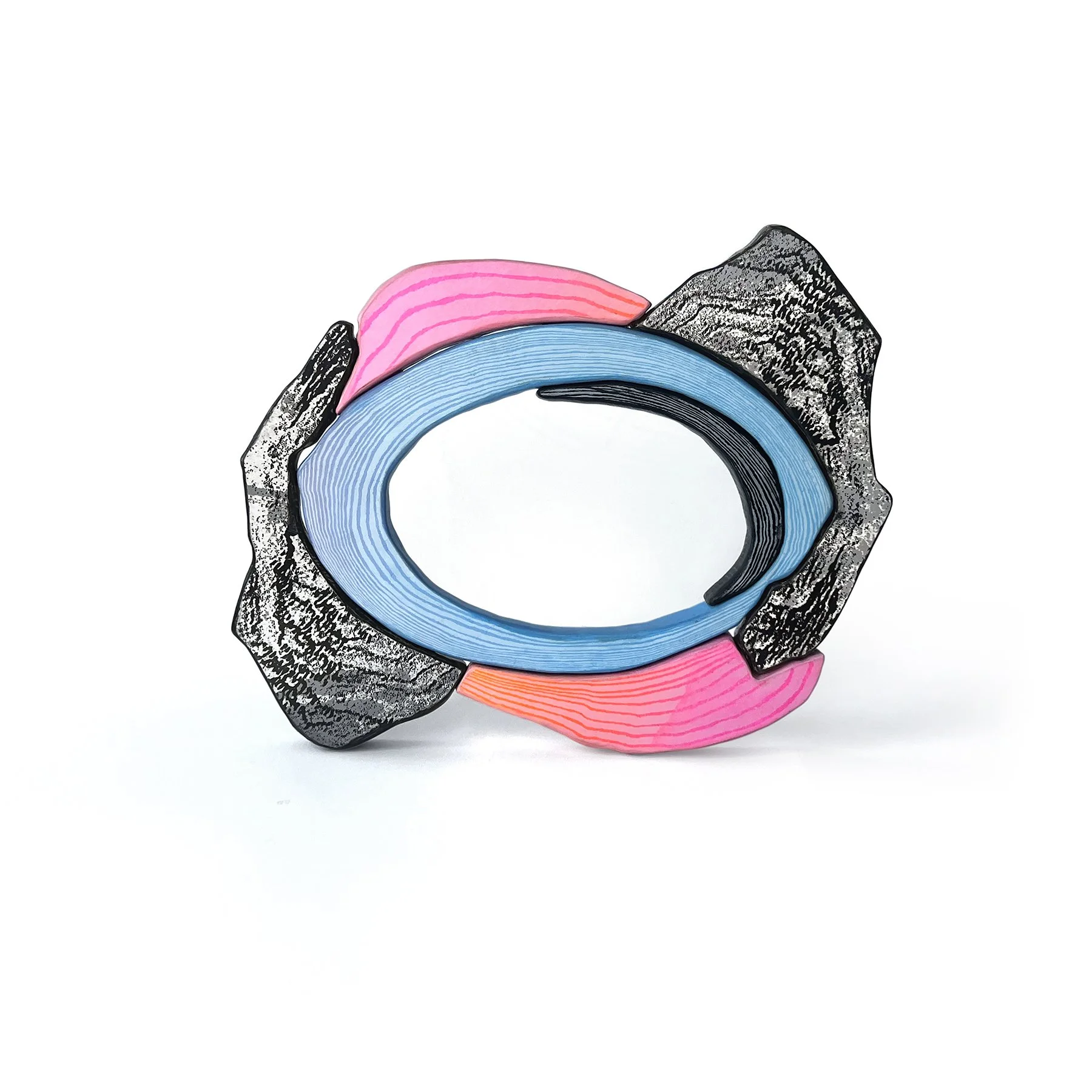
ZERO 03
2025
Acrylic and silkscreen ink on wood
23x28.5x2cm
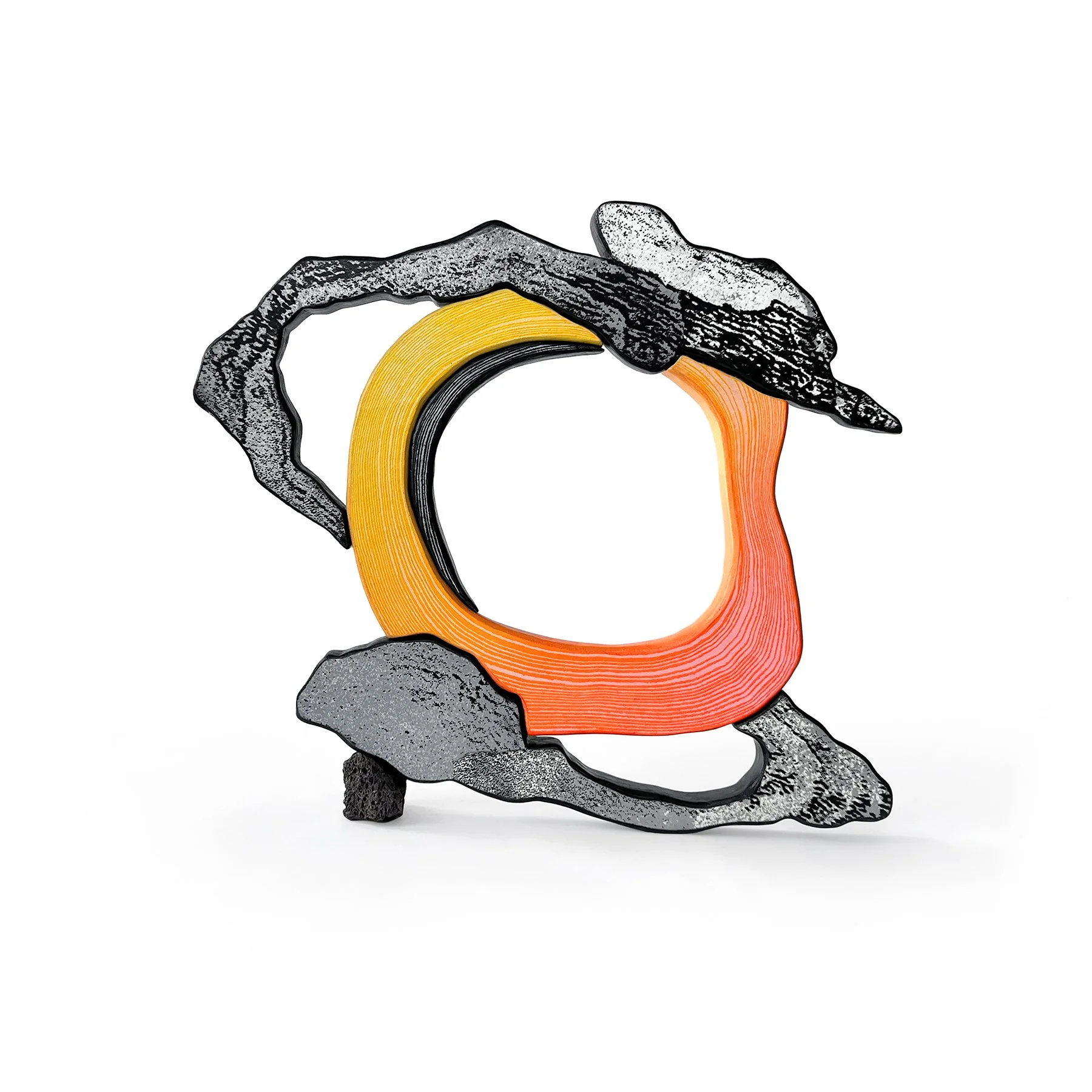
ZERO 04
2025
Acrylic and silkscreen ink on wood
24x28.5x2cm
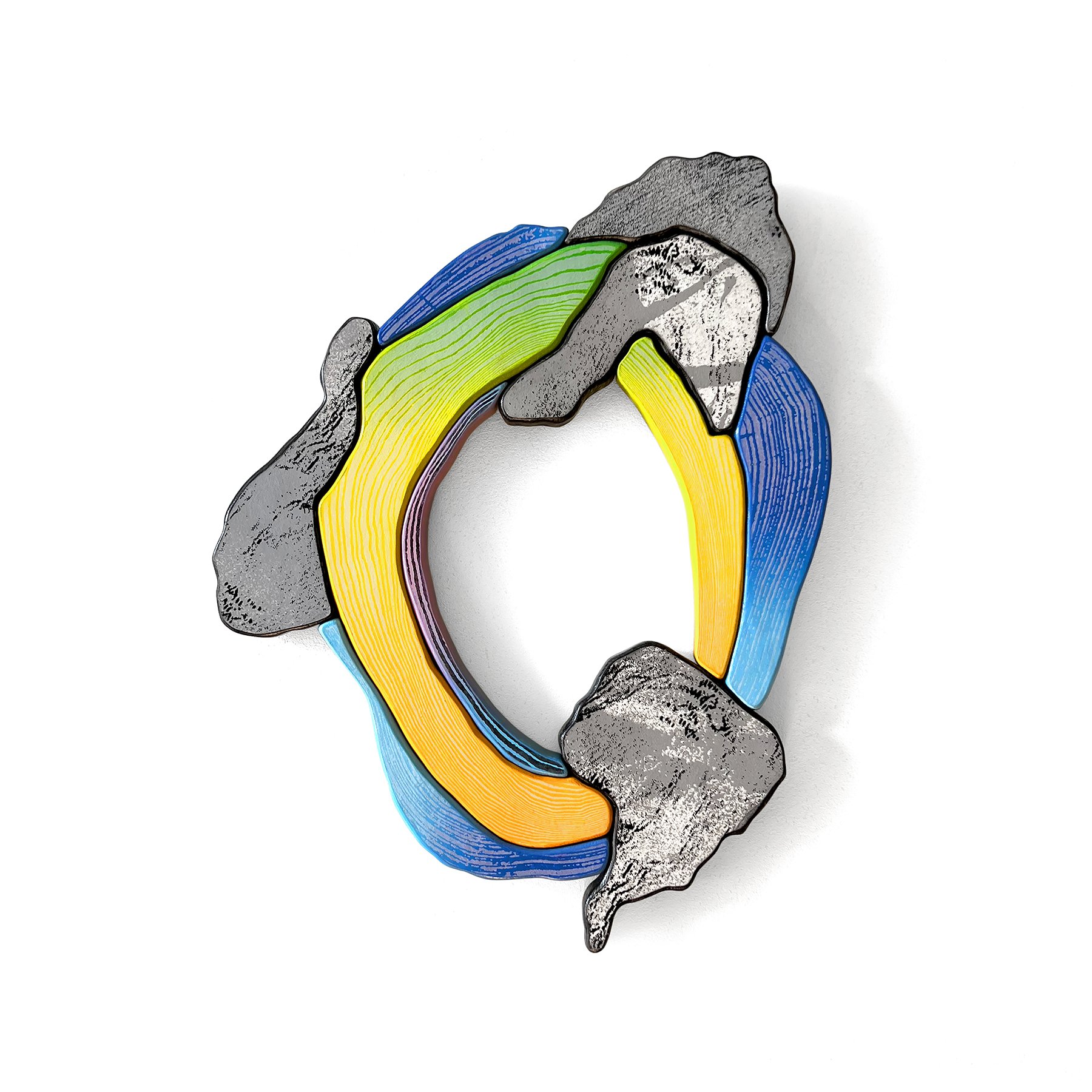
ZERO 05
2025
Acrylic and silkscreen ink on wood
29.5x38x2cm
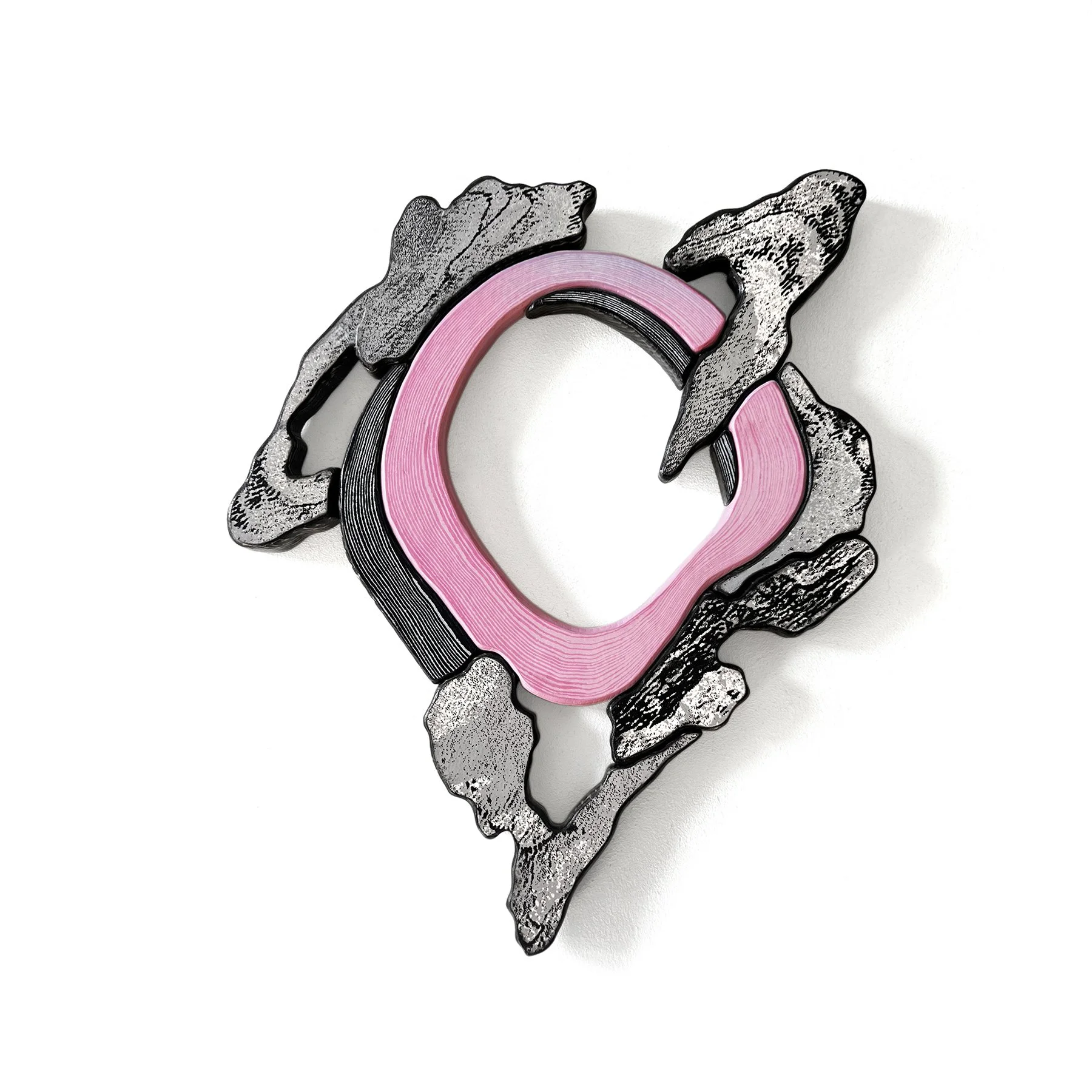
ZERO 06
2025
Acrylic and silkscreen ink on wood
28x36x2cm
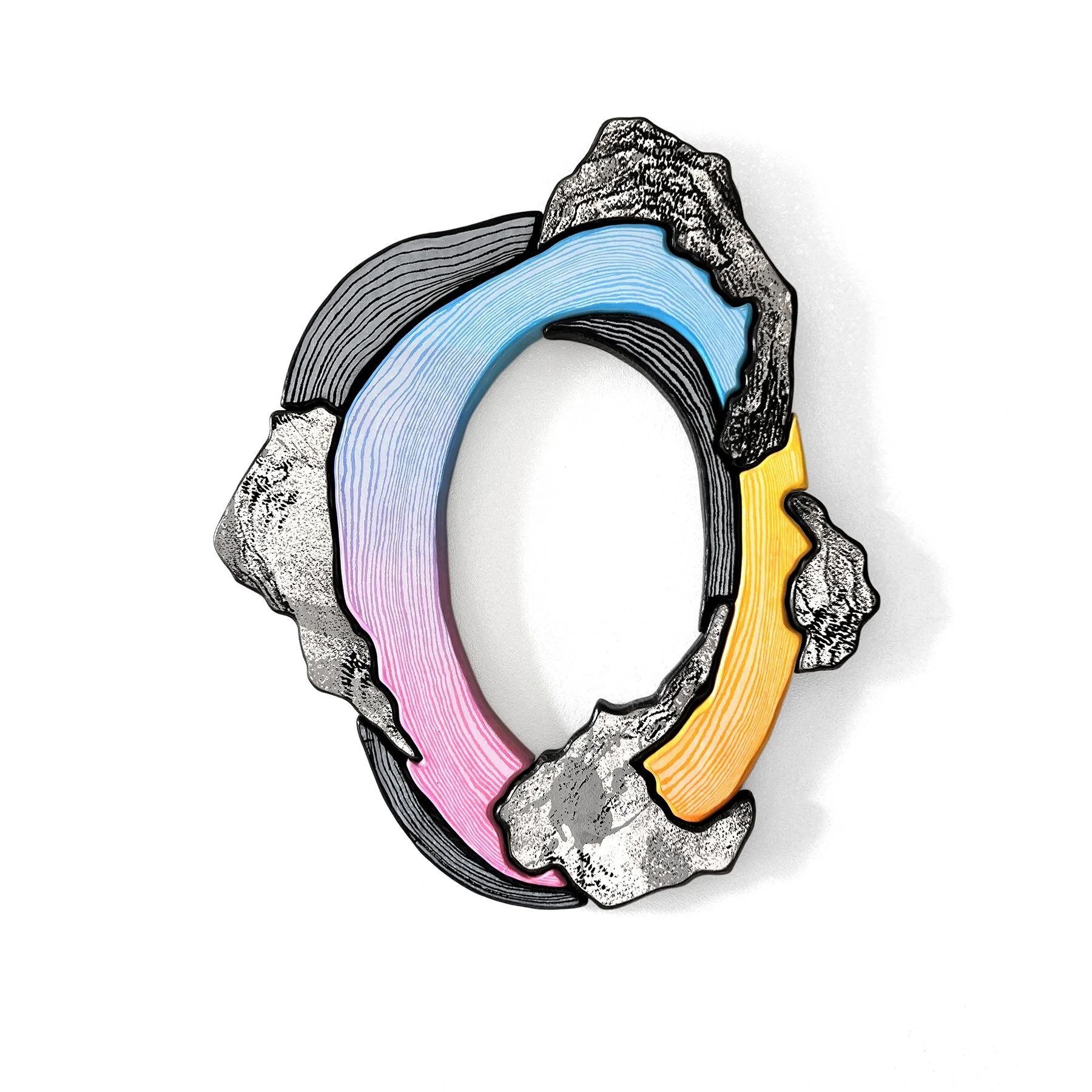
ZERO 07
2025
Acrylic and silkscreen ink on wood
33.5x39.5x2cm
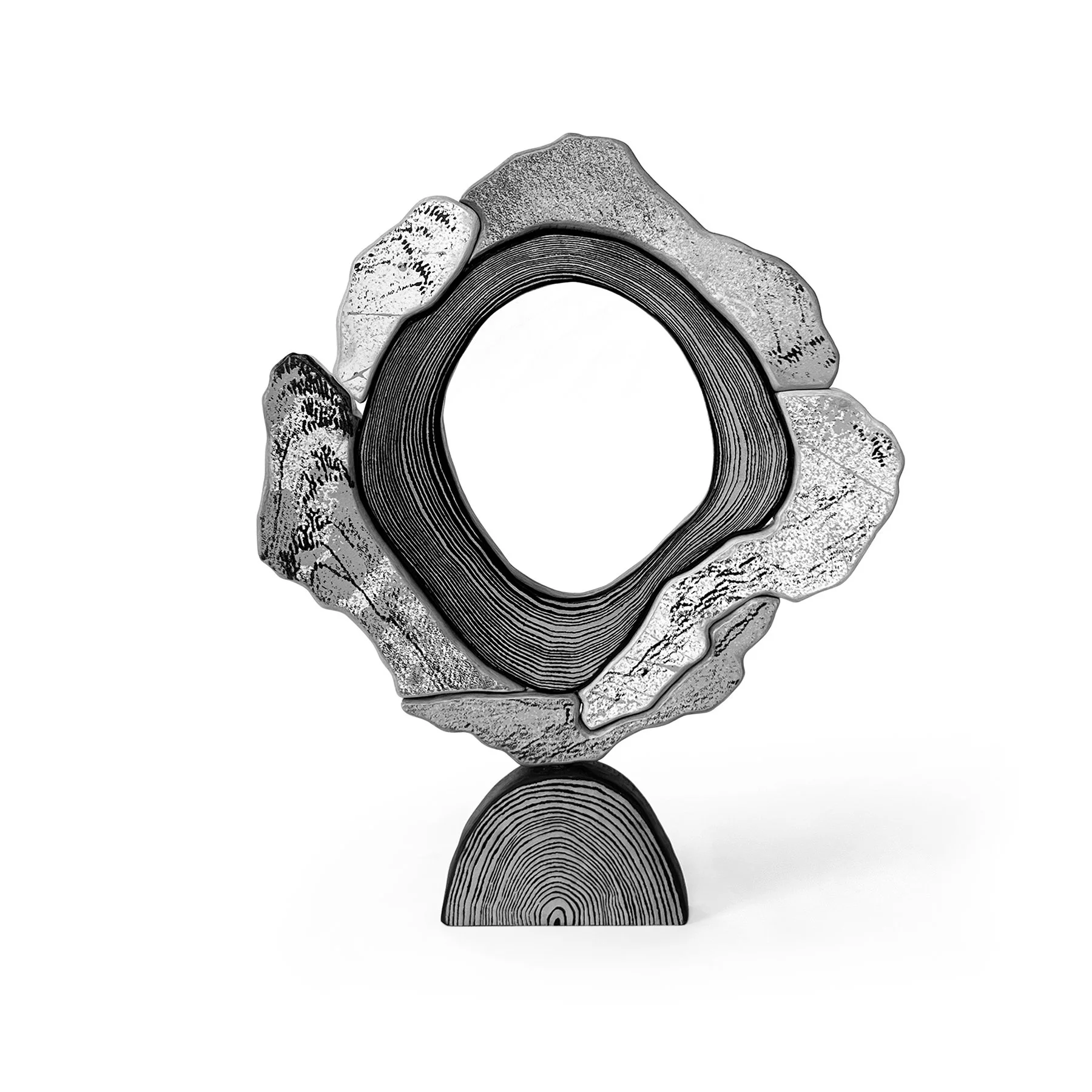
ZERO 08
2025
Acrylic and silkscreen ink on wood
28x34x2cm
ZERO / 零
ZERO is an ongoing exploration of temporality and form that occupies the threshold between two-dimensional print and three-dimensional object. Drawing from the cyclical nature of time in Eastern philosophy and the spatial awareness of traditional Chinese Shanshui (ink landscape) painting, the series translates the concept of landscape into a new material reality.
The works are constructed through deliberate, slow accumulation. Textures sampled from real tree rings — time made visible — are hand-printed onto wood, then hand-sawn and built up layer by layer. The dense, curving lines of the rings form a visual language close to topographic contour: not simply wood grain, but the cross-section of a mountain, the trace of moving water. This is the same gesture as Shanshui brushwork, which has always been a method for describing the texture and movement of natural surfaces. Placed together, the two languages form a closed loop — one the mark left by nature growing, the other the human hand recording it.
The circle is one of the oldest cross-cultural forms — complete, a structure that holds both growth and return, a symbol of openness and natural rhythms. It is from this form that the series takes its name: ZERO, the shape that is both beginning and end. A circular void anchors each piece, holding a space of stillness within a structure of outward growth. Uncorrected irregularities remain as honest registers of the material's resistance and the presence of the hand. In a culture of constant acceleration, these works propose that repetition, material honesty, and the power of gentleness can construct a space worth inhabiting.
ZERO 是一项关于时间性与形式的持续探索,作品游走于二维与三维之间的临界地带。作品从东方哲学中时间的循环性,以及中国传统山水画对空间的感知方式出发,将“景观”这一概念转化为一种新的物质现实。
作品通过有意识而缓慢的累积构成。艺术家从真实树木的年轮中提取纹理 - 让时间变得可见,再将其手工丝网印制于木材之上,随后手工锯切,并一层层叠加构筑。年轮密集而蜿蜒的线条形成了一种近似地形等高线的视觉语言:它们不再只是木材的纹理,而仿佛是山体的剖面,是流动的水所留下的痕迹。这与山水画中的笔墨动作有着相同的逻辑 - 自始以来,山水画便通过笔触描绘自然表面的质感与运动。两种语言并置在一起,形成一个闭合的循环:一种是自然生长留下的痕迹,另一种则是人之手对自然的记录。
圆是跨越文化而存在的古老形式之一: 它是完整的,也是一种同时容纳生长与回归的结构,象征着开放与自然的节律。系列正是由这一形式获得其名称:ZERO,这个既是起点、又是终点的形状。每一件作品中央都嵌入一个圆形的空洞,在不断向外生长的结构之中保留一处静止的空间。未经修正的不规则性被保留下来,作为材料抵抗以及手工痕迹真实存在的记录。在一个不断加速的文化环境中,这些作品提出了一种可能:重复、对材料本质的诚实,以及温柔本身的力量,能够共同构筑出一个值得栖居的空间。